Editors’ note: This post is part of a series featuring analysis of the International Court of Justice advisory opinion on Obligations of Israel as an Occupying Power. The introductory post to the series by Sean Watts is available here.
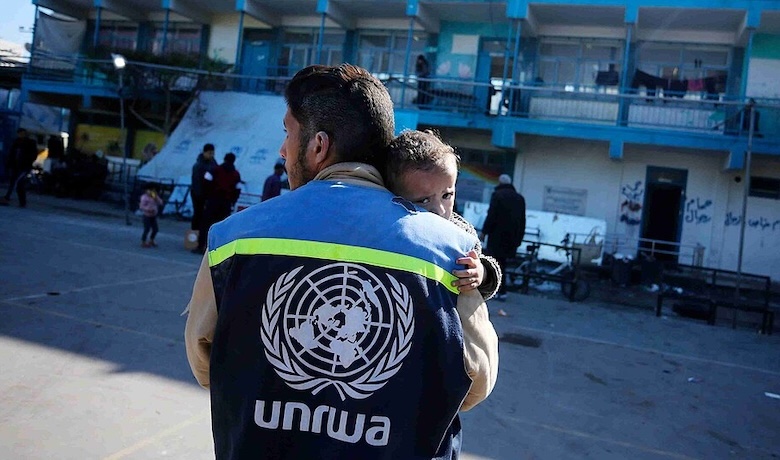
In late October 2025, the International Court of Justice (ICJ) delivered another Advisory Opinion (AO) in relation to Palestine. This time, the UN General Assembly (UNGA) sought the Court’s guidance after Israel passed several laws to dismantle the United Nations Relief and Works Agency for Palestine Refugees in the Near East (UNRWA)’s operations both on the territory of Israel and the Occupied Palestinian Territories (OPT). Israel justified its actions by alleging UNRWA’s complicity in terrorism. Others argued (see e.g. here and here) that the move was politically motivated. For a comprehensive explanation of the background to the AO, see Eliav Lieblich’s explainer here. In summary, the complex, tragic, political, and legal circumstances within the OPT made it necessary for the Court to clarify Israel’s obligations as an occupying power regarding the presence and work of UN agencies and other international actors.
Marko Milanovic has already outlined in two posts the key outcomes of this AO, namely the duty not to impede and to facilitate the humanitarian relief work of UNRWA, as well as other pertinent questions such as the status of Gaza as an occupied territory, the application of human rights law in armed conflict, and the UN’s immunity. What drew my attention, however, was an issue the Court touched upon only in passing, one that introduces considerable ambiguity and even risks for the future of Gaza. This issue is the “indispensable character” of the UN (para. 121) and the provision of humanitarian aid by new types of private actors.
I have previously written about the Gaza Humanitarian Foundation (GHF) here, arguing that while generally the privatization of a State’s obligations is not per se unlawful, it remains deeply problematic in certain contexts, such as the one we are currently discussing. And now, the AO leaves uncertain whether the Court accepts the legitimacy of a private entity delivering humanitarian aid in place of public, humanitarian, or UN entities.
The Occupying Power’s Obligations
Across 70 pages, the ICJ examined, inter alia, the occupying power’s obligations to ensure essential needs and its relationship with international organizations. The Court did not spend too much space discussing the obvious – that under Article 55 of the Fourth Geneva Convention, the primary responsibility to ensure food and medical supplies for the protected population lies with the occupying power itself.
The trickier and more interesting aspect of the AO was when the Court shifted the discussion toward the UN’s potential replaceability in the aid delivery system (para. 121 onwards). The Court held that as an occupying power, Israel was under both positive and negative obligations to provide humanitarian aid and not to impede the activities of the established humanitarian systems (para. 132). Further, because no realistic alternative to UNRWA existed (GHF included), the Court advised that Israel remained obliged to facilitate and guarantee the UN-led relief scheme (para. 123).
But what if GHF had been a fully functioning, effective private aid delivery system? Would the Court’s reasoning have been the same? In other words, is the threshold question under the Fourth Geneva Convention whether the population is “adequately supplied,” no matter how this aid is dispensed and how many other rules this alternative system violates? And only when this fails, does Article 59 trigger the occupier’s duty to accept impartial third-party relief?
Let me explain what I mean by reading closer the part of the AO (paras. 110-24) that addresses the obligation of Israel in relation to UNRWA. Looking at the concluding paragraphs of this section, the discussion of UNRWA’s role situates the issue of indispensability quite vaguely. We find the Court in a difficult position, trying to reconcile the institutional character of the UN with the factual incapacity of alternative arrangements. But it seems the Court’s reasoning rests on the latter. The Court recalls that UNRWA “has since become the lead United Nations agency for relief and assistance to Palestine refugees” and that it is “deeply integrated into the local infrastructure” of the OPT by providing for the population’s most basic needs (para. 121).
This indispensability, the Court notes, is also confirmed in various UNGA resolutions (although the most recent one dates to 2007). This framing can hint at the judges’ attempts to invoke UNRWA’s public and institutional nature as a body operating under the collective authority of the international community and endowed with the legitimacy and oversight that accompany that status.
Yet, the Court’s decisive language is still functional: “it is not possible to replicate the capacity of the United Nations, acting through UNRWA, to ensure that the population of the Gaza Strip is adequately provided for. UNRWA cannot be replaced on short notice and without a proper transition plan.” Simply put, the indispensability of the UN in this situation is a factual conclusion under the given circumstances. And let us now forget that UNWRA has been active in Palestine for a reason, namely, Israel’s general failure to provide for the occupied population under Article 55. But again, would the conclusion be the same if the GHF were a perfectly functioning alternative?
The next paragraphs of the judgment also leave confusion. The Court explicitly brackets the theoretical question, “whether or not the operations of the United Nations, acting through UNRWA, were replaceable,” while observing that “Israel had no replacement system mobilized for a ten-week period” (para. 123). This finding is empirical rather than doctrinal. The Court also details the deficiencies of the GHF being “inconsistent with core humanitarian principles,” and associated with the cases in which “over 2,100 Palestinians have been killed at or near the distribution sites.”
Here, we see that the insufficiency of the private distribution mechanism becomes the evidentiary pillar on which the Court’s reasoning on indispensability holds. The UNWRA is “indispensable” because every alternative has failed, not necessarily because only the UN can perform such functions in the region in principle. If the AO intended a normative stance, it could have clarified that, given the circumstances and the history of the conflict, only impartial international organizations that are structurally independent from an occupying power can lawfully deliver relief. Without such a pronunciation, the ICJ leaves interpretive space for future arguments that any “effective” system, even one domestically regulated, satisfies humanitarian obligations. The AO consequently risks transforming a legal safeguard into a pragmatic adequacy test, which could legitimize privatized, politically entangled aid schemes.
The institutional dimension also remains visible in the legal conclusion that follows. The Court declares UNRWA “an indispensable provider of humanitarian relief” and, invoking Article 59 of the Fourth Geneva Convention, reaffirms Israel’s obligation “to agree to and facilitate relief schemes provided by the United Nations and its entities, including UNRWA” (para. 124). Yet this almost casual invocation of Article 59 carries more weight than the Court lets on. We have Articles 55 and 59, but why doesn’t the ICJ fully unpack what it means in the context of the GHF?
Article 59 allows for relief schemes “subject to the approval of the Occupying Power” only when they are conducted “by States or impartial humanitarian organizations such as the International Committee of the Red Cross.” Impartiality here is the legal hinge distinguishing lawful humanitarian relief from the failed or non-existent attempts of an occupier under Article 55. Impartiality has the aim of halting potentially politicized distribution of resources, exactly for the scenario of Gaza. The GHF, however efficient it might become, would remain a private entity that operates without accountability frameworks. Due to its close ties with them, the occupying power and its allies may further use it to achieve political and military objectives.
Potential Fallout
I am afraid that by treating the indispensability of the UN as a matter of factual capacity rather than legal architecture underpinning the delivery of aid, as well as the outsourcing of international legal obligations, the Court risks eroding this normative line. It also presents a danger to the future plans for Gaza. In case of full annexation or permanent occupation, if Israel were to institutionalize a private yet domestically regulated humanitarian system capable of functioning efficiently, it might invoke the precedent established by this AO to legitimize that system under the guise of adequacy. As a result, the Court’s pragmatism might weaken the legal necessity of impartial, international, and publicly accountable relief mechanisms as well as the safeguards that exist to halt the privatization and commodification of “opportunities” caused by unimaginable atrocities.
Moreover, this dilemma is particularly acute in the context of the ongoing discussion on rebuilding Gaza. The proposed (mostly by the United States and other Western states) post-conflict reconstruction plans envisage public-private partnerships and donor-driven consortia managing the delivery of basic services and reconstruction (e.g., the 20-point plan and its consequences for the privatization of peace in Gaza).
If the AO’s logic is to be read literally, could such arrangements be deemed compatible with the occupier’s obligations so long as they are effective? Should effectiveness become the test under humanitarian law instead of impartiality and independence? I am afraid the AO’s affirmation of UNRWA’s indispensability is double-edged as it could defend the UN’s present role while simultaneously leaving open a dangerous future in which the very criteria that make the UN and similar public entities indispensable—public character, oversight, and normative impartiality—could be deemed legally optional.
***
Julia Emtseva is an Assistant Professor of Law at HEC Paris.
The views expressed are those of the author, and do not necessarily reflect the official position of the United States Military Academy, Department of the Army, or Department of Defense.
Articles of War is a forum for professionals to share opinions and cultivate ideas. Articles of War does not screen articles to fit a particular editorial agenda, nor endorse or advocate material that is published. Authorship does not indicate affiliation with Articles of War, the Lieber Institute, or the United States Military Academy West Point.
Photo credit: Ashraf Amra

Related Posts