The United States Military Academy (USMA) offers internships and immersion programs every summer as part of the Academic Individual Advanced Development (AIAD) initiative to expand cadets’ knowledge through experiential learning. Within this program, the West Point Department of Law and Philosophy uses AIADs to expose cadets to the importance of the law of armed conflict (LOAC) through studying war crimes in Europe and Asia. This summer, cadets participated in a Far East War Crimes AIAD, visiting Japan and South Korea, to examine events from the Second World War and the Korean War. The cadets explored issues related to prisoners of war (POW) and the complex questions surrounding the conduct of all parties in the Korean War. Cadets visited the War Memorial of Korea in Seoul and toured the Geoje POW camp to learn about POW treatment during the Korean War.
The Geoje POW camp, located on an island south of Busan in South Korea, demonstrated the challenges that States experienced with detention operations during large-scale combat operations. At its peak, the camp housed over 100,000 POWs, separated on their political affiliation as either anti- or pro-communist. The camp’s history is illustrative of the larger detention challenges during the Korean War because it combined both the practical difficulties of safely managing large numbers of POWs, as well as the complications involved when the conflicting powers possessed stark ideological differences.
The challenges included basic concerns about the proper care, feeding, and well-being of large numbers of POWs in a camp exposed to tropical heat in the summer and wet, cold winters. Additionally, the camp experienced ideological violence that ended with POWs forcibly taking control of the camp and capturing the U.S. Camp Commandant. Finally, the camp raised questions about forced political education, with U.S. and South Korean forces requiring North Korean and Chinese POWs to attend classes on the values of democracy and a unified Korea. The issues in Geoje regarding the United States’ and South Korea’s treatment of North Korean (DPRK) POWs were not one-sided. The DPRK, for example, tortured, executed, maltreated, and denied medical care to U.S., South Korean, and other nations’ POWs. Questions still exist about whether the DPRK has fully repatriated POWs since the 1953 Armistice.
This post builds on the AIAD and suggests that the detention challenges during the Korean War offer important lessons for the United States, South Korea, and other partners regarding a potential conflict with the DPRK. It analyzes the legal risks associated with POWs and detainees in a conflict on the Korean Peninsula, emphasizing why military planners and exercises must anticipate these challenges. This post will address the issue in two parts: 1) the challenges of a Korean conflict initially classified as an international armed conflict (IAC) and then shifting to a non-international armed conflict (NIAC); and 2) why the operational challenges of renewed conflict make detention planning on the Korean Peninsula essential to prevent the loss of legitimacy from detention abuses.
Conflict Classification on the Peninsula
The Korean Peninsula presents a challenge for detention operations because experts predict that any renewed Korean conflict will shift from an IAC to a NIAC. The transition between these two conflict classifications requires military planners to prepare, plan, and allocate resources for two distinct detention regimes. Each regime establishes specific treatment obligations, carrying the risk of losing legitimacy if the detaining power fails to manage detainees according to the applicable LOAC provisions.
Classification matters because States apply different detention rules depending on conflict classification. IACs fundamentally differ from NIACs because IACs allow combatants to gain POW status upon capture by the opposing State. Examples of POWs include members of the armed forces of a party to a conflict in an IAC or those who belong to a militia meeting the four criteria outlined in Article 4(A) of the Third Geneva Convention of 1949 (GC III). POWs receive combatant immunity for their actions during conflict, except in cases such as war crimes when a combatant’s actions violate the LOAC. They are also entitled to various treatment protections during custody, including basic allowances, retention of military rank, limits on punishment, and other treatment rules enumerated in GC III.
Conversely, NIACs do not grant POW status to captured personnel. NIACs differ because they involve either a State and a non-State armed group or multiple non-State armed groups. Accordingly, POW status is not applicable. Instead, the protections arise from Common Article 3 of the Geneva Conventions, Additional Protocol II (for its States party), and customary international law. Unprivileged belligerents are furthermore entitled to basic protections for humane treatment, but can be held criminally responsible for their involvement in hostilities under the detaining power’s domestic law.
Renewed Korean Conflict: Multiple Classifications
Experts forecast that an insurgency is the probable outcome of a renewed conflict on the Korean Peninsula. This is because the DPRK will likely collapse in the face of a conventional conflict with the United States and South Korea, including its overall government and military structure.
Experts expect an insurgency for multiple reasons. First, the social hierarchy in the DPRK, shaped by its Juche ideology, provides limited incentives for military and political elites to participate in post-conflict reconciliation and rebuilding efforts. Second, a large percentage of the DPRK’s population has either served or is serving in its military forces, including over 100,000 special forces and other unconventional units that possess both higher training and greater loyalty to the regime. Third, reports have indicated that the DPRK studied examples from Iraq and Afghanistan to ensure its special operations forces are prepared to continue operations against the United States and South Korea, even if the regime falls. Defeating the DPRK regime, therefore, is unlikely to bring an end to the state of armed conflict on the Peninsula.
The probability of an insurgency affects legal considerations and has a historical analogue with the United States’ experience after Saddam Hussein’s regime fell in Iraq. There, the United States quickly defeated Saddam’s forces, but the resulting power vacuum and sectarian violence launched a NIAC. The resulting insurgency created numerous practical and legal challenges, including questions concerning applicable treatment rules and what accountability measures were warranted for detainees.
A renewed Korean conflict raises similar concerns. Unlike in the IAC phase, where DPRK soldiers would qualify for POW status and eventual release unless they committed war crimes or human rights abuses, the NIAC phase prompts questions about how long to detain former DPRK personnel who become insurgents. Currently, scholars and States lack a clear definition of when NIACs end, which creates ambiguity about how long a State can rely on the LOAC to justify detention.
Therefore, the United States and South Korea would face difficult decisions surrounding detention length, managing security threats with detained personnel, and whether to implement accountability measures for detainees with criminal proceedings. In short, the question of conflict classification requires consideration by military planners, given the potential challenges of a renewed Korean Conflict and the experience of States managing IACs that lead to NIACs.
Operational Challenges on the Peninsula
The United States, South Korea, and allied partners will face major operational challenges during a renewed Korean conflict. Three issues shape this discussion: 1) the resources and personnel needed to counter the DPRK’s military capabilities; 2) the expected level and extent of damage from the conflict; and 3) why operational challenges present significant risks if States cannot meet their LOAC detention obligations. Recognizing these challenges is crucial for understanding why proper detention planning mitigates legal and operational risks.
Demand on Resources and Personnel
Commentators and policy analysts contend that any renewed conflict on the Peninsula will result in high casualties for all sides, widespread damage to physical infrastructure, and extensive manpower commitments from the United States and South Korea to achieve a DPRK defeat. This estimate relies on the ongoing arms buildup and militarization in the DPRK, and the fact that the DPRK requires compulsory service of all men for ten years, and women for seven years. Additional reports indicate the DPRK continues to develop military capabilities and gather resources, including nuclear and ballistic weapons capable of reaching the United States and its allied partners, to secure its regime and sovereignty.
Further details illustrate the DPRK’s focus on military power and its comprehensive approach to preventing any crossing of the 38th parallel. The U.S. Defense Intelligence Agency issued a public report in 2021 indicating that the DPRK’s armed forces consist of approximately 1.3 million personnel within a population of 25 million people. In addition to the active military, the DPRK has approximately 7 million personnel in its paramilitary, reserve, and police forces. Furthermore, the DPRK has actively expanded its asymmetric forces to prolong any conflict and ensure instability for the United States and South Korea. The DPRK presents a significant detention challenge because its personnel outnumber South Korea’s forces, and a relatively high percentage of DPRK inhabitants have military training that could pose a threat if a NIAC emerges after a regime collapse.
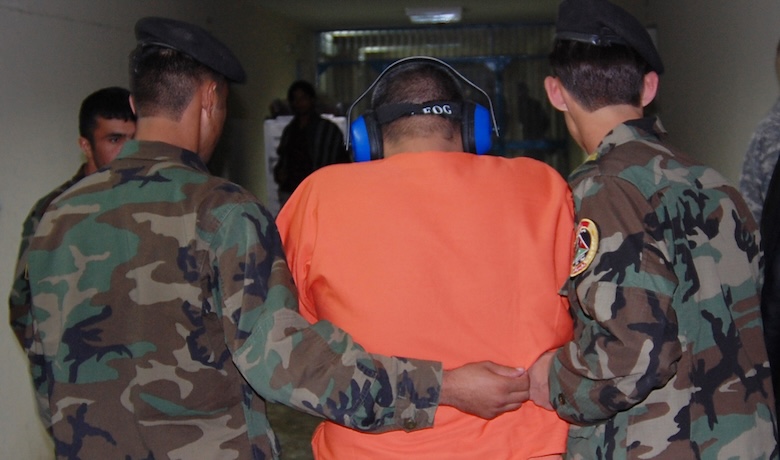
Current projections anticipate a lengthy conflict with widespread fighting across the Peninsula. The estimates argue that the United States and South Korea would detain over 100,000 individuals during the early stages of a conflict with the DPRK. One U.S. military police (MP) officer noted that typical planning estimates for detention suggest that a single MP battalion can effectively secure, manage, and care for approximately 4,000 detainees. The DPRK figures exceed the total detention population from six years in Iraq, in an environment where the United States would face a significantly better-equipped and resourced adversary. In short, the size of the DPRK’s military forces indicates that the United States and its partners would face a substantial requirement to ensure the required capability to safely and humanely execute detention operations.
Scale and Scope of Conflict Damage
The likely scope and scale of damage during and following a renewed conflict also present a detention planning challenge for the United States and South Korea. Detention operations require a significant outlay of personnel, equipment, and logistical support to effectively and safely manage detainees. Some authors have argued that detention operations following the Second World War have consistently underestimated the requisite personnel and resources for effective and humane detention operations. Therefore, understanding the scope of the conflict explains why the United States and South Korea require detailed planning and resourcing because of the potential for violent conflict and the associated need for extensive detainee operations.
A potential conflict will result in significant human casualties and physical damage on the Peninsula. A conflict could lead the DPRK to use nuclear, chemical, or biological weapons. It would also cause massive damage across the Peninsula, considering the DPRK’s conventional arsenal that can not only defend territory, but also strike South Korea’s civilian population centers. Finally, military leaders have noted that any potential conflict will result in a prolonged struggle, military commitment, and casualties greater than those in past U.S. military operations in the 21st century.
Corresponding to the military resources needed to defeat the DPRK, effective detention operations also require proper support to prevent mishandling detainees or failing to meet treatment standards. One article reinforced the fact that States, under the LOAC, must provide for the basic needs of detainees, regardless of their detention status. This obligation creates tangible planning requirements to avoid logistical or personnel shortfalls. Otherwise, the United States and South Korea risk shortfalls, such as those the United States experienced during Operation Desert Storm when units lacked adequate supplies and facilities for Iraqi detainees.
As a result, the United States and South Korea must manage detention operations—which would likely number over 100,000 DPRK detainees—and do so during a conflict that involves significant casualties and physical damage on the Peninsula. Underestimating the challenge, or waiting until after the fact, raises the risk of reverting to past shortcomings like those the United States and South Korea experienced in managing the Geoje POW camp.
Subsequent Risks of Legal Shortcomings with Detention Operations
The United States and South Korea face a planning challenge that requires detention operations in a highly contested setting. Despite this, no operational or military necessity release clause exempts the United States or South Korea from the obligation to treat and care for POWs and detainees humanely. Any possible shortcoming could threaten military operations overall due to the potential damage from negative coverage or disinformation in the information domain, compounding the requirement for humane treatment.
The United States’ experience following the Abu Ghraib abuse scandal and the current coverage of Russian abuses of Ukrainian POWs illustrate the risk that States face when their detention operations fail LOAC compliance. The risk arises because information operations affect operational legitimacy. Factors such as LOAC compliance impact whether States can maintain support from parties necessary to accomplish military and political goals, including among domestic populations and strategic partners. Put simply, States “can ill-afford to win certain phases while losing others, particularly one that has captured the attention of the international media.”
The risk remains constant with both intentional detainee abuses and those caused by mismanagement or inadequate resourcing. In Iraq, the United States, despite its early defeat of Saddam Hussein’s regime, quickly lost international and domestic support following the 2004 Abu Ghraib prison abuse scandal. A 60 Minutes report publicized the abuse, including graphic photos, that introduced questions about the war’s legitimacy and the United States’s LOAC compliance in Iraq. The U.S. Senate investigated the issue and reported that the abuse was attributable to a combination of inaccurate legal opinions, resource shortfalls, and mismanagement of U.S. operations in Iraq. While the report did not show that abuse of detainees reflected official policy, the event nonetheless diminished U.S. legitimacy for its overall military operations in Iraq.
Intentional abuse also damages the legitimacy of military operations. Russia’s abuse of Ukrainian POWs has resulted in widespread condemnation. The UN Human Rights Monitoring Mission in Ukraine published a report in March 2024 about the widespread Russian abuse of Ukrainian POWs, including assaults, mock executions, inhumane living conditions, and sexual violence. Ample news reports mirror the UN Report, while States such as the United Kingdom publicly condemn Russia’s abuse of Ukrainian POWs.
Both examples are relevant for U.S. and South Korean military planners. First, like the initial 1950–1953 war, a renewed conflict presents operational challenges that can lead to mismanagement or resource shortages, potentially resulting in detainee mistreatment issues. The estimated scope of DPRK detainees poses a tangible risk of shortcomings if the United States and South Korea do not plan or allocate sufficient resources for effective detention operations. Second, the conflict involves ideologically opposed States engaged in an internecine war. The initial conflict involved deliberate abuses due to the stark differences between South Korea and DPRK; therefore, a failure to plan and train for potential detainee operations increases the risk of abuses. Effective planning and training provide the United States and South Korea with an opportunity to ensure that personnel understand detention treatment standards before intense and fast-paced combat operations. In short, detention operations on the Korean Peninsula carry several risk factors that, if not managed, could threaten the legitimacy of U.S. and South Korean military actions should detainee abuse or maltreatment occur.
Conclusion
The cost of renewed conflict on the Korean Peninsula is enormous. Lessons from history and the challenges faced by the United States and South Korea show that careful planning for detention is crucial to ensure LOAC compliance. Inadequate planning can undermine the legitimacy of military operations, even if they succeed tactically and operationally. Conversely, proper planning and resource allocation for detention offers the United States and South Korea additional tools to address military challenges and maintain legitimacy.
***
MAJ Evin Stovall is an Assistant Professor in the Department of Law and Philosophy at the United States Military Academy, West Point, New York. He is also the Executive Officer of the Lieber Institute for Law & Warfare.
The views expressed are those of the authors, and do not necessarily reflect the official position of the United States Military Academy, Department of the Army, or Department of Defense.
Articles of War is a forum for professionals to share opinions and cultivate ideas. Articles of War does not screen articles to fit a particular editorial agenda, nor endorse or advocate material that is published.
Photo credit: Shawn Graham

Related Posts