World Updates

Is Lawfare for Lawyers? – Lieber Institute West Point
A growing body of scholarship is engaged with the threat of hostile “lawfare” or “legal warfare.” This scholarship is driven by lawyers, legal professionals, and individuals affiliated with military and government legal advisory communities. Almost all this scholarship—rightly—bemoans the lack of formal government strategy to counter the lawfare threat while calling for proactive solutions. Lawfare […]
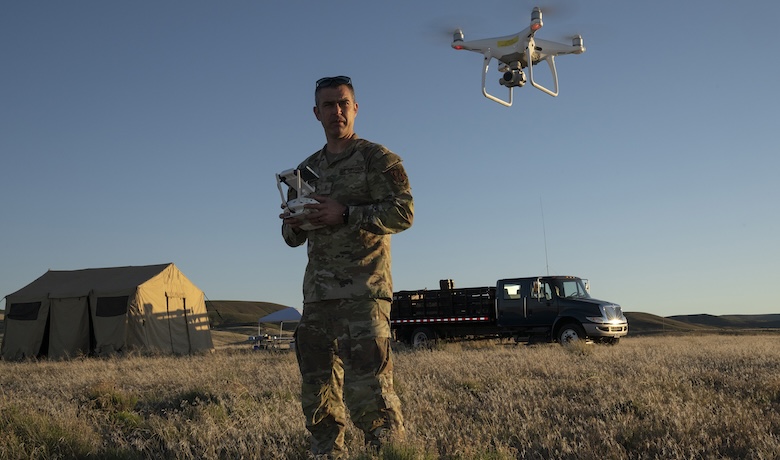
Unleashing Drone Dominance: Rethinking Department of Defense Weapons Reviews
In November 2001, the United States conducted what is considered to be the first ever armed drone attack in Afghanistan. Over the next twenty years, the United States dominated the production of large unmanned systems that cost millions of dollars each to produce. In a January 2020 strike that showcased its drone dominance, the United […]

CyCon 2025 Series – Legal Reviews of Military Artificial Intelligence Capabilities
Editors’ note: This post is part of a series that features presentations at this year’s 17th International Conference on Cyber Conflict (CyCon) in Tallinn, Estonia. Its subject will be explored further as part of a chapter in the forthcoming book International Law and Artificial Intelligence in Armed Conflict: The AI-Cyber Interplay. Kubo Mačák’s introductory post is […]
CyCon 2025 Series – AI-Enabled Offensive Cyber Operations: Legal Challenges in the Shadows of Automation
Editors’ note: This post is part of a series that features presentations at this year’s 17th International Conference on Cyber Conflict (CyCon) in Tallinn, Estonia. Its subject will be explored further as part of a chapter in the forthcoming book International Law and Artificial Intelligence in Armed Conflict: The AI-Cyber Interplay. Kubo Mačák’s introductory post is […]

Revisiting Customary IHL Series – The ICRC’s Study at 20
Editors’ note: This post introduces a series relating to the ICRC’s Customary International Humanitarian Law Study, featured across Articles of War and Völkerrechtsblog. The series highlights presentations delivered at the young researchers’ workshop, Customary IHL: Revisiting the ICRC’s Study at 20, hosted by the Institute for International Peace and Security Law (University of Cologne) and the Institute for […]

When Belligerent Drones Knock on Neutral Waters: Archipelagic Sea Lanes in the Age of Kamikaze Systems
In 2024 to 2025, escalating tensions between Israel and Iran saw waves of missiles and drones cross regional skies. Jordan, a neutral (non-belligerent) State, intercepted many of these projectiles as they entered its airspace. From an international law perspective, the violation was clear: missiles and drones had penetrated neutral territory and the responsible States therefore […]
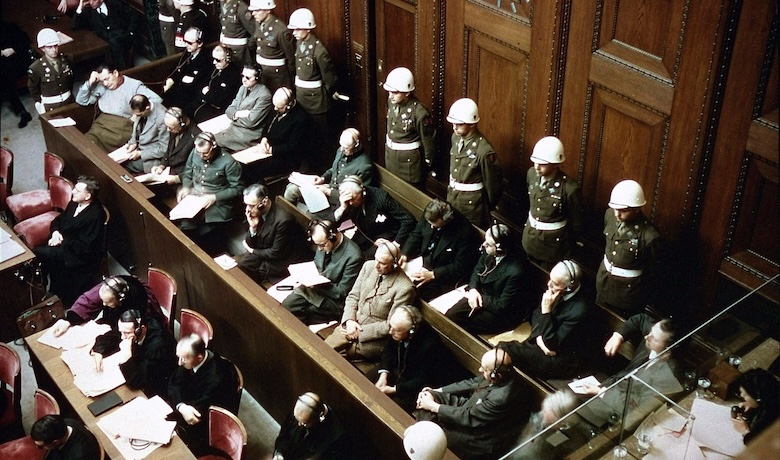
Is There a Victim State Exemption from Immunity Ratione Personae Accruing to Heads of Aggressor States?
When considering the application of immunity ratione personae to heads of aggressor States, we invariably assume that it applies erga omnes, that is, vis-à-vis the criminal jurisdiction of all foreign States. How sound is that assumption? Ample State practice and opinio juris demonstrate that this immunity bars third States. The same is not so evident, […]
The Ban on Force or the System: What’s Really Dying?
In the past year, a growing chorus of voices has warned that the international “rule-based” order—along with the prohibition on the use of force—is unraveling, with the United States poised to withdraw from the very system it once built. This post does not seek to endorse or refute this contention. Instead, it aims to unpack […]

Exceptions to the Separation Between the Jus ad Bellum and Jus in Bello
According to canonic learning and overwhelming practice, the rules of the jus ad bellum and those of the jus in bello are separated in the sense that the application of each depends on its own legal triggers and regulations. This principle of separation works both ways. The independence of the jus in bello from the […]
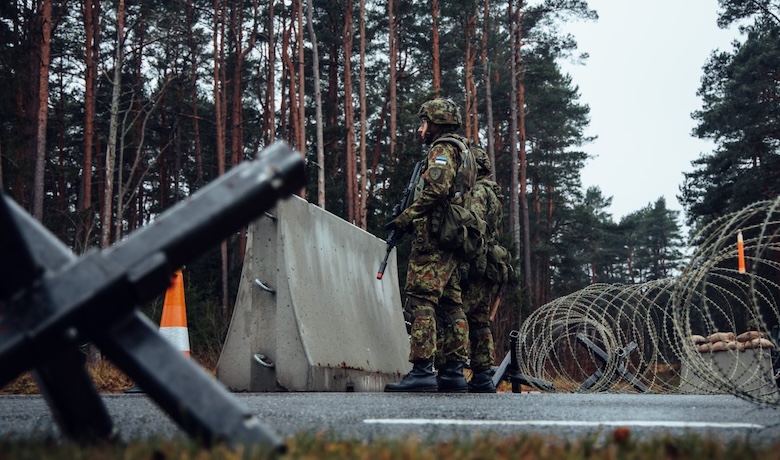
The Baltic Defense Line: Military Necessity and Civilian Protection on NATO’s Eastern Flank
Europe’s easternmost flank is undergoing one of the most strategically calibrated defensive preparations since the Cold War. Estonia, Latvia, and Lithuania are coordinating the construction of the Baltic Defense Line, a sophisticated network of trenches, bunkers, observation posts, anti-armor obstacles, and surveillance systems stretching along their borders with Russia and Belarus. The initiative is designed […]